
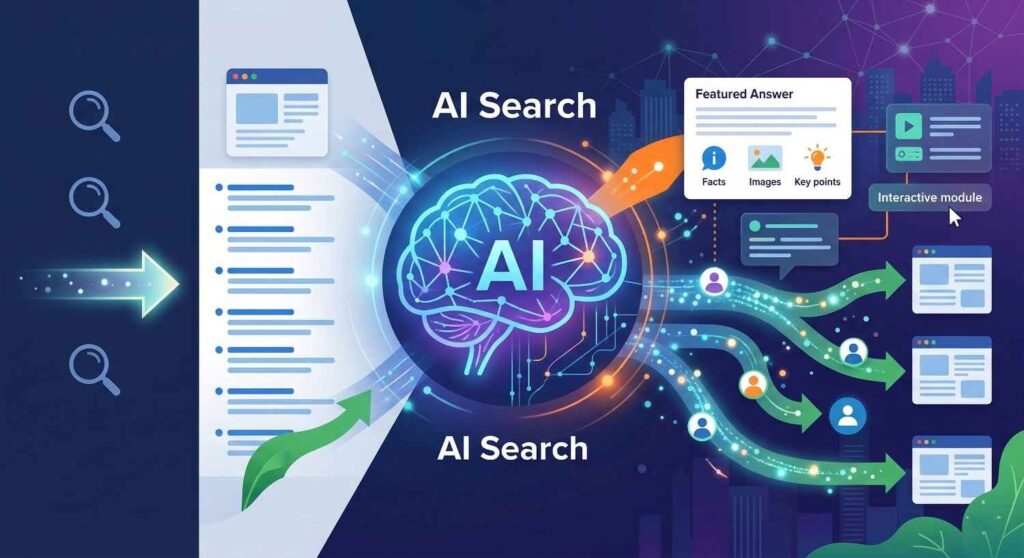
Search engines are evolving rapidly as artificial intelligence becomes a core part of how information is discovered online. Over the past few years, AI-powered search features have transformed the way users interact with search engines. Instead of simply displaying a list of links, modern search engines now provide direct answers, summaries, and AI-generated insights. This shift is creating a noticeable AI impact on organic traffic, changing how websites gain visibility and attract visitors. For businesses, marketers, and content creators, understanding how AI search works is essential to maintaining strong search performance and adapting SEO strategies for the future.
Understanding AI Search Engines
AI search engines use advanced technologies such as machine learning, natural language processing, and generative AI to understand user queries more effectively. Traditional search engines mainly relied on keywords and backlinks to rank pages, but modern systems focus more on context, intent, and relevance.
Today, AI-powered search engines analyze large volumes of data to deliver more accurate and personalized results. They can understand conversational queries, recognize user intent, and provide summarized responses directly on the search results page. This means users can get answers faster without necessarily clicking multiple links.
As a result, the search experience has become more interactive and intelligent. Search engines are moving toward a model where they function as answer engines rather than simple directories of web pages.
How AI Is Transforming Search Results
Artificial intelligence is reshaping the structure of search engine results pages. Instead of the traditional list of blue links, users now see AI-generated summaries, featured snippets, knowledge panels, and contextual suggestions.
These AI-driven elements help users find information quickly by highlighting the most relevant content. For example, AI can combine information from several sources and present a clear, summarized answer at the top of the results page.
This change is altering how users interact with search results. Many users now read the AI-generated answer first before deciding whether to visit a website. Because of this, the visibility of content within these AI summaries has become an important factor in modern SEO strategies.
The AI Impact on Organic Traffic
One of the biggest concerns among website owners is the AI impact on organic traffic. With AI-generated answers appearing directly in search results, many users may find the information they need without clicking through to a website.
This phenomenon is often referred to as zero-click searches. When users receive quick answers directly on the search page, the number of traditional organic clicks may decrease. However, this does not mean organic search is disappearing. Instead, the nature of organic traffic is evolving.
Websites that provide authoritative, well-structured, and informative content still have strong opportunities to appear in AI-generated results. When AI systems use content from trusted sources, those websites gain higher credibility and brand visibility. Businesses that focus on high-quality content can still benefit from increased exposure even if the search experience changes.
Why Traditional SEO Strategies Are Changing
The rise of AI search engines is pushing marketers to rethink traditional SEO methods. In the past, ranking on search engines often focused heavily on keyword density, backlinks, and technical optimization. While these elements still matter, they are no longer the only factors that influence rankings.
AI-powered search algorithms analyze user behavior, content quality, and contextual relevance. Search engines now prioritize pages that provide real value and answer user questions effectively. This means that simply targeting keywords is not enough.
Modern SEO strategies must focus on creating content that demonstrates expertise, authority, and trustworthiness. These principles align closely with Google’s E-E-A-T guidelines, which emphasize experience, expertise, authoritativeness, and trust. Websites that demonstrate these qualities are more likely to perform well in AI-driven search environments.
How to Optimize Content for AI Search Engines
To adapt to the changing search landscape, businesses must create content that aligns with how AI search engines evaluate information. One of the most effective approaches is to write content that clearly answers user questions.
Content should be structured in a logical and easy-to-read format with clear headings, concise explanations, and valuable insights. AI systems prefer content that is well organized and easy to interpret.
Another important strategy is focusing on search intent. Understanding what users are truly looking for allows content creators to deliver relevant information that satisfies their needs. Articles should aim to provide comprehensive answers rather than surface-level information.
This is where strategies like Generative Engine Optimization are becoming increasingly important. As AI-driven search tools become more common, optimizing content so that AI systems can easily understand and reference it is essential. Businesses that adopt these strategies early will be better positioned to gain visibility in AI-generated search responses.
The Role of User Intent and Search Experience
AI search engines are designed to understand the meaning behind user queries rather than just the words used in the search. This means that content must be written with the user’s needs in mind.
When users search for information, they expect fast, accurate, and helpful answers. Content that directly addresses their questions is more likely to perform well in AI-powered search results.
User experience also plays a critical role. Websites that load quickly, offer clear navigation, and present information in an engaging way tend to perform better in search rankings. High-quality visuals, structured content, and easy readability all contribute to better user engagement.
By focusing on user intent and overall experience, businesses can improve their chances of appearing in AI-powered search results and maintaining consistent organic traffic.
Future of SEO in the Age of AI Search
The future of SEO will be shaped by the continued growth of artificial intelligence in search technology. As AI models become more advanced, search engines will become even better at understanding complex queries and delivering personalized results.
Content creators will need to focus more on building topical authority. Instead of publishing isolated articles, businesses should create content clusters that cover topics in depth. This helps search engines understand the expertise of a website within a specific subject area.
Voice search, conversational search, and AI chat interfaces will also play a larger role in the future. These technologies rely heavily on natural language processing, which means content should be written in a conversational and easy-to-understand style.
Businesses that stay updated with these trends and continue producing valuable content will be able to maintain strong visibility in the evolving search landscape.
Common Challenges Marketers May Face
While AI-powered search offers many benefits, it also presents new challenges for marketers. One of the biggest challenges is the increasing competition for visibility within AI-generated search results.
Another challenge is adapting to constantly changing algorithms. As AI systems continue to evolve, SEO strategies must also evolve to remain effective.
Content saturation is another issue. With more businesses producing digital content, standing out requires deeper insights, expert knowledge, and high-quality information. Marketers must focus on creating unique and valuable content that truly helps users rather than repeating information that already exists online.
Conclusion
Artificial intelligence is transforming the search landscape and creating a significant AI impact on organic traffic. Search engines are becoming smarter, more conversational, and more focused on delivering direct answers to users. While this shift may reduce some traditional organic clicks, it also creates new opportunities for websites that provide valuable and authoritative content.
Businesses that adapt their SEO strategies to align with AI-powered search will be better positioned to succeed in the future. By focusing on user intent, high-quality information, and structured content, marketers can continue to attract organic traffic and remain competitive in the evolving world of AI search.
FAQs
The AI impact on organic traffic refers to how AI-powered search features change the way users interact with search results, which can influence website visits and click-through rates.
AI search engines use technologies such as machine learning and natural language processing to understand user queries and deliver more accurate and relevant search results.
AI-generated answers may reduce some clicks, but high-quality content can still attract traffic and improve brand visibility in AI-powered search results.
Websites should focus on clear content structure, answering user questions, improving readability, and aligning content with user search intent.
The future of SEO will focus more on content quality, topical authority, user experience, and optimization strategies that help AI systems understand and reference website content.
AI-powered search results are answers generated using artificial intelligence that summarize information from multiple sources to provide quick and accurate responses directly on the search results page.
Zero-click search happens when users find the answer they need directly on the search engine results page without visiting a website. This trend is increasing due to AI summaries and featured snippets.
AI search engines prioritize high-quality, trustworthy, and informative content. Websites that provide valuable insights and well-structured information are more likely to appear in AI-generated search results.
AI search engines analyze user intent to understand what information a person is looking for. Content that directly answers user questions and solves problems tends to rank better.
Generative Engine Optimization is a strategy that focuses on optimizing content so AI-powered search engines and generative tools can easily understand, reference, and include it in AI-generated answers.