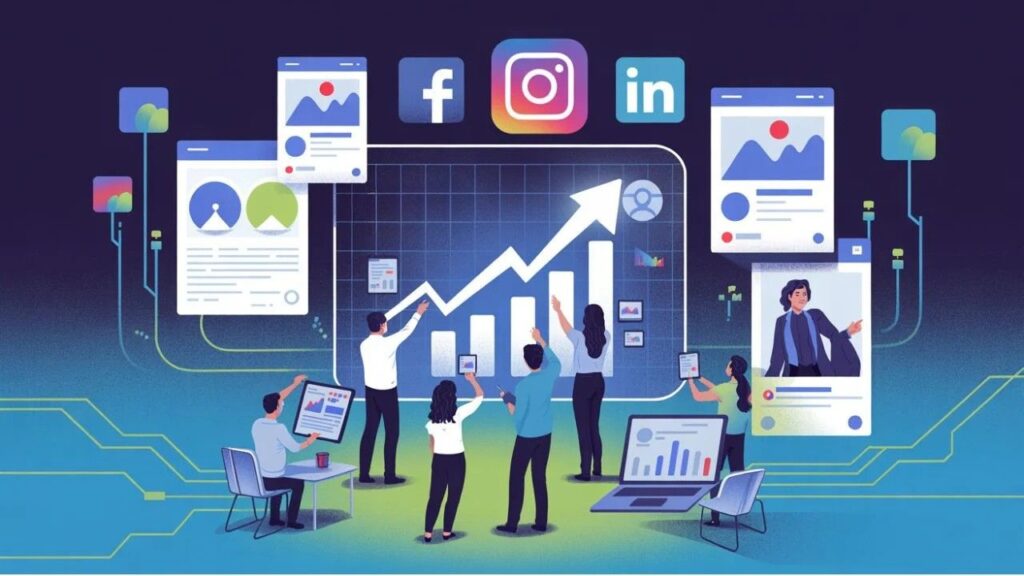
Social media marketing (SMM) lets businesses reach and influence customers by engaging on platforms like Facebook, Instagram, LinkedIn, X, and TikTok. It involves sharing content (posts, images, videos, etc.) and interacting with audiences. Studies show about 68% of consumers follow brands on social media for updates, and a strong social presence can significantly boost brand trust. Tecmax Digital’s goal is to help you harness these channels to educate, engage, and build loyalty with your audience.
What Is Social Media Marketing?
Social media marketing means using social networks to connect with customers and promote your business. It involves creating and sharing content on platforms like Facebook, Instagram, LinkedIn, X, Pinterest, and more to increase brand awareness, generate leads, and drive traffic or sales. For example, a campaign might feature a new product launch or a series of helpful tips. Effective SMM requires strategy: set clear goals, choose the right platforms, and track metrics like engagement (likes, comments, shares) and conversions.
Tecmax Digital helps businesses plan content calendars and craft compelling posts; by consistently sharing valuable content and engaging with followers, you can turn casual browsers into loyal fans.

Why Is Social Media Marketing Important for Businesses?
Social media is now central to customer communication. Nearly all companies use it for marketing, customer service, and public relations. Key reasons SMM matters include:
- Brand Reputation & Trust: A social presence lets you shape how people perceive your brand. By delivering helpful content and engaging politely, you build trust. Consumers increasingly use social channels as touchpoints – positive interactions can turn followers into loyal customers.
- Wider Reach & Awareness: Every share or like exposes your brand to new audiences. Social media is a cost-effective way to reach large groups and build recognition. In fact, about 46% of consumers use social networks when researching brands, second only to search engines.
- Customer Insights: Social platforms provide data on who engages with your content.
Monitoring comments, messages, and analytics helps you learn about customer preferences in real time. This lets you tailor products and messaging to what your audience truly cares about. - Cost-Effective Marketing: Organic social posts are inexpensive, and paid social ads offer precise targeting by demographics, location, and interests. This means you get more value for each advertising dollar.
- Community Building: Social media enables two-way dialogue. You can build active communities (fan pages, groups) around your brand where customers share feedback and ideas. This earned media (reviews, user content) is highly credible and cost-efficient.
In short, social media marketing makes your brand more visible and approachable while giving you tools to interact with customers 24/7. Tecmax Digital’s experience shows even small, consistent efforts on social platforms can lead to measurable gains in loyalty and sales.
Benefits of Social Media Marketing
- Stronger Engagement & Loyalty: You connect with followers daily through posts, stories, and conversations. Engaged customers spend more, advocate for your brand, and become repeat buyers.
- Competitive Monitoring: You can watch competitors’ social activities and industry trends,adapting your strategy in real time.
- Instant Feedback Loop: Social media allows immediate feedback. You can run polls or read comments to understand customer needs better.
- Positive Public Relations: Timely, helpful responses to comments or crises generate positive PR. Satisfied customers may post testimonials or tag your brand, naturally promoting you.
- Early Issue Detection: Problems often surface first on social (negative reviews or complaints). Monitoring these channels lets you address issues quickly before they escalate.
- Targeted Communities: Social platforms help you build niche groups (e.g., Facebook Groups) where your brand can become a trusted authority
These benefits together create a powerful marketing engine. No wonder 80% of business leaders plan to increase their social media budgets in the next few years.
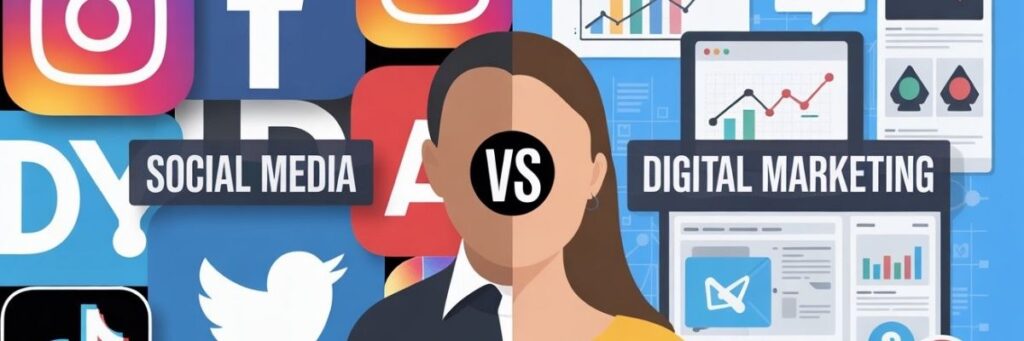
Social Media vs. Digital Marketing
Social media marketing is part of the broader field of digital marketing. Digital marketing includes all online efforts (SEO, email, PPC, content marketing, etc.), while SMM specifically focuses on social platforms. Key differences include:
- Two-Way Interaction: Social channels are built for conversation. Unlike one-way ads or emails, you publish content and respond to customers in the same place.
- Content Variety: SMM uses varied content – posts, videos, live streams, stories, polls – often with quick turnaround. It emphasizes creativity and timeliness.
- Audience Engagement: Social media measures success by engagement (likes, comments, shares) as well as conversions. Building relationships is a major goal.
- Community Building: SMM lets you gather followers into communities (fan pages, groups). This makes word-of-mouth and advocacy easier.
- Viral Potential: Content on social can spread organically. A highly shareable post can multiply its reach without extra spending.
What Social Media Marketers Do (Ongoing Tasks):
- Optimize Profiles: Keep bios, links, and branding up to date on each platform.
- Plan & Publish Content: Create a mix of promotional, educational, and entertaining posts (photos, videos, infographics, stories).
- Target Audiences: Use platform tools to aim posts and ads at the right demographics and interests
- Engage Actively: Reply to comments and messages. Participate in relevant conversations and host live Q&A sessions.
- Monitor Reputation: Track mentions and feedback. Address complaints or negative comments tactfully to show you care.
- Collaborate: Partner with influencers or other brands to amplify reach. Share news coverage or guest content to lend credibility.
- Run Paid Ads: Invest in social advertising to boost important posts or reach new users with targeted ads
- Analyze Results: Use analytics tools to measure likes, shares, reach, click-throughs, and conversions. Adjust your strategy based on what works
Overall, social media marketing requires a personal, community-focused approach. Tecmax Digital tailors each strategy to your unique audience and goals, ensuring your social presence aligns with broader marketing campaigns.
8 Effective Ways to Build Audience Trust on Social Media
Trust is earned on social platforms by being authentic, helpful, and responsive. Here are eight proven strategies Tecmax Digital recommends:
- Share Your Expertise and Valuable Content. Deliver high-quality, relevant content consistently. Instead of constant self-promotion, focus on educating or entertaining your audience (tips, how- to guides, industry insights, behind-the-scenes stories, etc.). Many brands follow the 80/20 rule: use about 80% of posts for information or engagement and only 20% for direct promotions.
To implement this, research your customers’ questions and interests, identify gaps in competitors’ content, and align your content calendar with current trends.
By providing real value first, you demonstrate authority and genuine interest in your audience’s needs. - Encourage Engagement and Respond Promptly.Social media is inherently social – merely posting is not enough. Reply quickly to comments and messages, answer questions clearly, and thank users for shares or feedback.
Engage by asking open-ended questions in your posts or running interactive polls. For example, if a customer comments on a post, acknowledge it or offer additional help.
If someone tags your product, comment or share it. Each interaction shows transparency and builds confidence in your brand. - Feature User-Generated Content (UGC). Encourage customers to share photos, testimonials, or videos of them using your products.
This user-generated content is incredibly persuasive because people trust real customer experiences. For instance, Starbucks’s annual #REDCUPContest (fans posting holiday drink pictures) has generated over 40,000 entries, acting as social proof that real people enjoy the brand’s products.
|
You can run similar campaigns: create a branded hashtag, offer a prize for the best photo, or ask customers to tag you. Reposting or featuring UGC (with credit) validates those customers and highlights authentic product stories. - Ask for Reviews and Testimonials. Online reviews are critical trust-builders. About 71% of consumers say positive reviews make them more likely to purchase, and 55% will only consider businesses with at least a 4-star rating. Encourage satisfied customers to leave reviews on Google, Facebook, Yelp, or your own site – for example, by sending a follow-up email after a sale or running a social campaign requesting testimonials.
When people see real customers giving high ratings or detailed comments, it boosts confidence in your brand. Also, monitor reviews and respond to each one: thank people for praise and address negative feedback with empathy. Handling criticism well shows you care, further enhancing trust. - Provide Credible Resources and Links. Every piece of content you share should be backed by credibility. When linking to external information, choose authoritative sources (industry studies, respected news sites, expert blogs) and briefly explain why the source is reliable.
This shows your audience you rely on trusted data. In your social posts, use recognizable link shorteners or a branded domain (e.g. brand.link/…) to signal a safe destination.
Branded short links can increase click-through rates because they convey transparency and familiarity. Avoid clickbait or spammy links, as any hint of obscurity can reduce credibility. - Show Behind-the-Scenes (Be Transparent). People trust people. Showing the human side of your business makes your brand relatable. Post photos or videos from company events, daily office life, or the product creation process.
Highlight your company’s values (like community service days) and introduce team members. Even a live tour of your workspace can intrigue customers.
These “behind-the-scenes” glimpses tell followers “we have nothing to hide” and foster a sense of inclusion. When people feel like insiders, they trust your brand more, strengthening loyalty. - Go Live and Use Real-Time Video. Live streaming on social platforms is one of the most
engaging formats today. Going live (on Facebook, Instagram, LinkedIn, etc.) lets you interact in real time with your audience. Host Q&A sessions, product demos, or casual office tours live.
Live video is raw and unedited – viewers appreciate seeing the real, unscripted side of your brand.
Live sessions often generate higher engagement because audiences can ask questions on the spot. This transparency and immediacy build trust and make your brand feel more accessible. - Collaborate with Influencers and Media. Partnering with respected influencers or well-known brands can lend credibility to your social strategy. When an influencer your audience trusts mentions your brand, their endorsement transfers trust to you.
Identify influencers or industry leaders whose audience aligns with yours, and collaborate on content (product reviews, giveaways, co-hosted webinars, etc.)
Similarly, share any positive media coverage on your social channels. If a reputable news site or blog mentions your company, post it – third-party validation reassures customers that others trust you.
Through these eight tactics, your social profiles will become more trustworthy. Consistency is key: maintain a regular posting schedule, use a consistent brand voice, and always keep customer needs at the center. Over time, these efforts translate into stronger brand loyalty and higher conversions.
How a Customized Social Media Marketing Plan Can Increase Profits
A well-crafted social media plan does more than improve trust – it can directly boost your bottom line. Here’s how a targeted SMM strategy drives revenue:
- Targeted Audience Engagement: By understanding your audience’s demographics, interests, and habits, you create content and ads that resonate. This precision leads to higher engagement and better conversion rates, with fewer wasted impressions. When your posts address your audience’s needs, more followers become customers.
- Increased Brand Visibility: Scheduling posts for when your audience is most active maximizes visibility. Consistent posting and promotions put your brand in front of more potential customers, increasing site traffic and sales. For example, if you know a large segment of your audience is online at 8 PM, you can post promotions then for maximum impact. Over time, this higher visibility drives more traffic and revenue.
- Cost-Effective Advertising: Social media ads can be finely targeted by demographics, interests, and behaviors, so your budget focuses only on likely customers. With a customized plan, you continuously test and optimize ads – finding which audiences and creatives yield the best results. This approach typically lowers cost-per-click and increases return on investment compared to broad, untargeted campaigns.
Tecmax Digital focuses on measurable results. We align your social goals (like generating a set number of leads) with clear analytics, so every dollar spent is tracked to a business outcome.

Invest in Social Media Marketing & Expand Your Reach
Social media marketing is no longer optional – it’s essential. With billions of people using social platforms daily, these channels are prime avenues for customer engagement and sales.
However, competition is fierce and brands that hesitate risk falling behind as audiences spend more time online. Now is the time to craft a strategic SMM plan with expert help.
Tecmax Digital can develop a custom social media roadmap tailored to your industry and audience, creating high-value content and targeted campaigns. Contact us to start growing your reach and profits.
FAQs
- How do I create a social media strategy?
Define clear goals (brand awareness, lead generation, etc.) and identify your target audience (demographics, interests). Research competitors and industry trends, and choose a few platforms that match your audience. Plan a content calendar mixing educational, entertaining, and promotional posts. Set metrics (likes, comments, clicks, conversions) to track success and adjust your strategy based on results. - What type of content works best for my business?
It depends on your audience, but focus on visual and interactive formats: videos, images, infographics, polls, and user-generated posts. Humanize your brand with behind-the-scenes clips or team introductions. Keep your tone authentic and helpful. Fun content (memes, stories) can work if it aligns with your brand voice. Experiment to see what resonates most with your followers. - How often should I post on social media?
Consistency is key. Many brands post daily on fast- paced platforms (Instagram, TikTok) and a few times a week on more professional networks (LinkedIn). It varies by platform and audience. Start with a realistic schedule (e.g., 3 posts per week on each platform) and use analytics to find your audience’s most active days and times. If engagement is high, you can increase frequency. - Which platforms should I use for my business?
Choose platforms where your customers spend time. For B2B and professional networking, LinkedIn is ideal. Visual or lifestyle brands do well on Instagram and Pinterest. For short-form video and trends, try TikTok. Facebook and X (Twitter) can reach a broad general audience. You don’t need to be on every platform; focus on 2–3 where your audience engages most. - How can I measure the success of my social media campaigns?
Track metrics like engagement (likes, comments, shares), reach/impressions, website traffic from social, leads generated, and conversion rates. Use platform analytics or tools like Google Analytics. Define KPIs aligned with your goals (e.g., percentage of social visitors who become leads) and review them regularly to refine your strategy. - How will hashtags help me?
Hashtags categorize content and increase discoverability. Use a few relevant, popular hashtags in your posts (e.g. #DigitalMarketing) to reach interested users. Don’t overload; focus on 3-5 targeted tags. Branded hashtags (like #YourCompanyName) can encourage user participation. Hashtags mainly broaden organic reach rather than directly boosting ROI - How can I increase my followers and likes?
Post consistently and engage with your audience. Share high-quality, interesting content and stories. Incorporate relevant trending topics or challenges. Collaborate with influencers or run contests (e.g., “tag a friend to win”). Use appropriate hashtags and cross-promote your social accounts on other channels (website, email). Paid promotions can also give an initial boost. Focus on attracting followers who match your target audience for genuine engagement. - Why does engagement matter?
Engagement (likes, comments, shares) indicates how interested your audience is in your content. Higher engagement means more people see your posts, and social algorithms tend to prioritize popular content. Engaged followers are more likely to remember and trust your brand, refer you to others, and ultimately become customers. - Should I use paid advertising on social media?
Yes, if you have clear objectives and a budget. Paid social ads (sponsored posts, story ads) can dramatically increase your reach beyond organic followers. They allow precise targeting by demographics and interests, ensuring the right people see your offers. Paid campaigns are especially useful for time-sensitive promotions or new product launches. Combine them with organic efforts for best results. - How do I handle negative comments or feedback on social media?
Stay calm and professional. Thank the person for their feedback, apologize if appropriate, and offer a solution or next steps (e.g., “We’re sorry this happened. Please DM us with more details so we can help.”). Never delete or ignore genuine criticism (unless it’s spam or hate). Publicly addressing issues shows you care and are responsive, which can actually increase trust in your brand.